

In spring 2021 a man going by “Greasy Pete” ascended a redwood known by locals as the “Mama Tree” in Jackson Demonstration State Forest to protest logging. Similar protests were starting to escalate controversy between California’s forest management and community desires for their forests. Local communities had some straightforward questions: Why was a state agency logging in this redwood forest at all? Why weren’t the largest trees in this forest being spared? By June 2021, a temporary moratorium was placed on logging the area surrounding the Momma Tree due to public outcry.
The California Department of Forestry and Fire Protection (CalFire) manages 8 demonstration forests, of which Jackson is the largest, spanning 48k acres. With these forests, CalFire is mandated by the public resource code to manage for maximum sustained timber production while also considering recreation, aesthetic enjoyment, and incorporating experimentation (i.e., research). CalFire interprets this to include demonstrating “good” forest management, hence the name “demonstration forest.” These objectives are inherently conflicting, thus the controversy. Some are subjective; what exactly is “good” management? The protests started because the local community was concerned CalFire’s definition of “good” was out of step with the times.
At a loss for what to do, CalFire contacted the avant-garde tree traipsing redwood ecologists Steve Sillett and Marie Antoine to weigh in. Steve and Marie had been promoting the idea of leaving trees with the most ecological potential during logging in secondary forests (previously logged and relatively young) to live their full lifespan based on research showing that a minority of the largest trees provide the most arboreal (within-tree) habitat and that large redwoods store enormous amounts of carbon in decay-resistant red heartwood (which is what redwood is named for). His assessment: CalFire was cutting many of the largest trees. Perhaps they didn’t need to to reach their mandates. Where was the middle ground where CalFire could incorporate community values while also creating revenue?
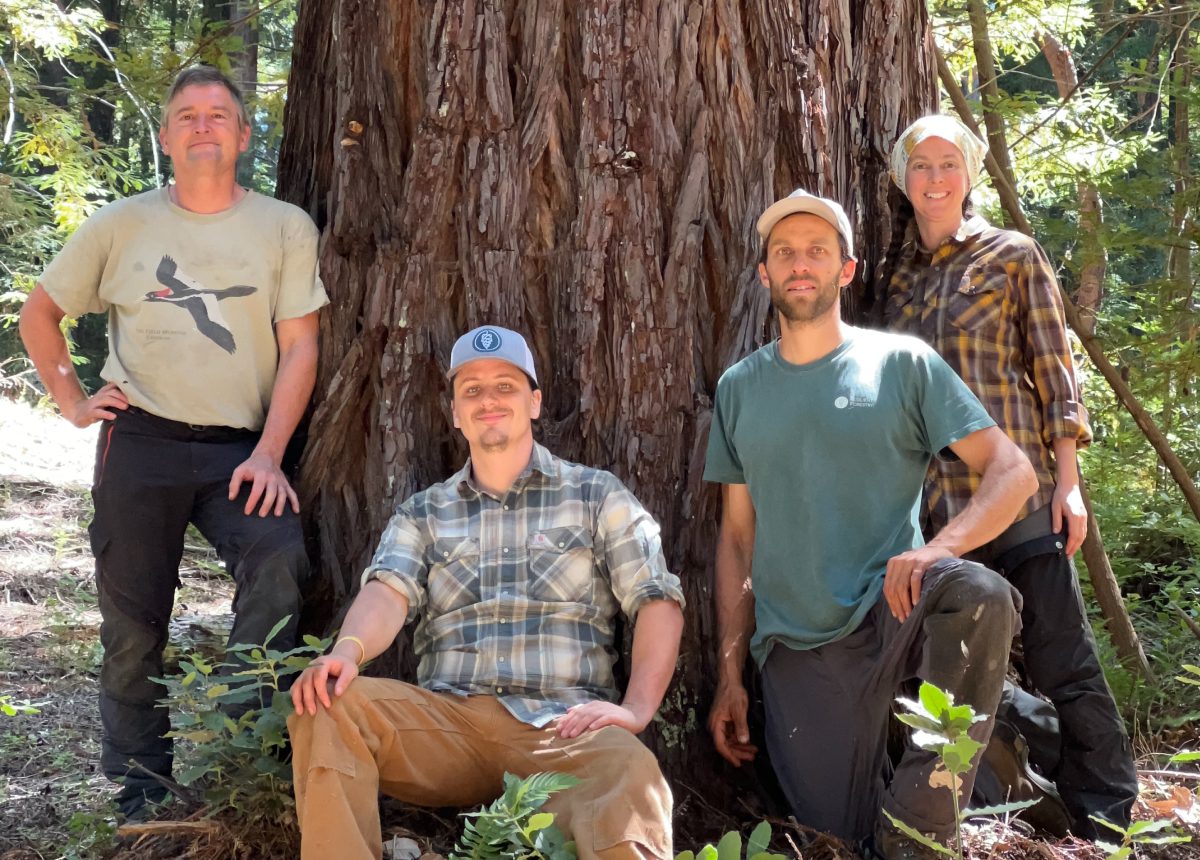
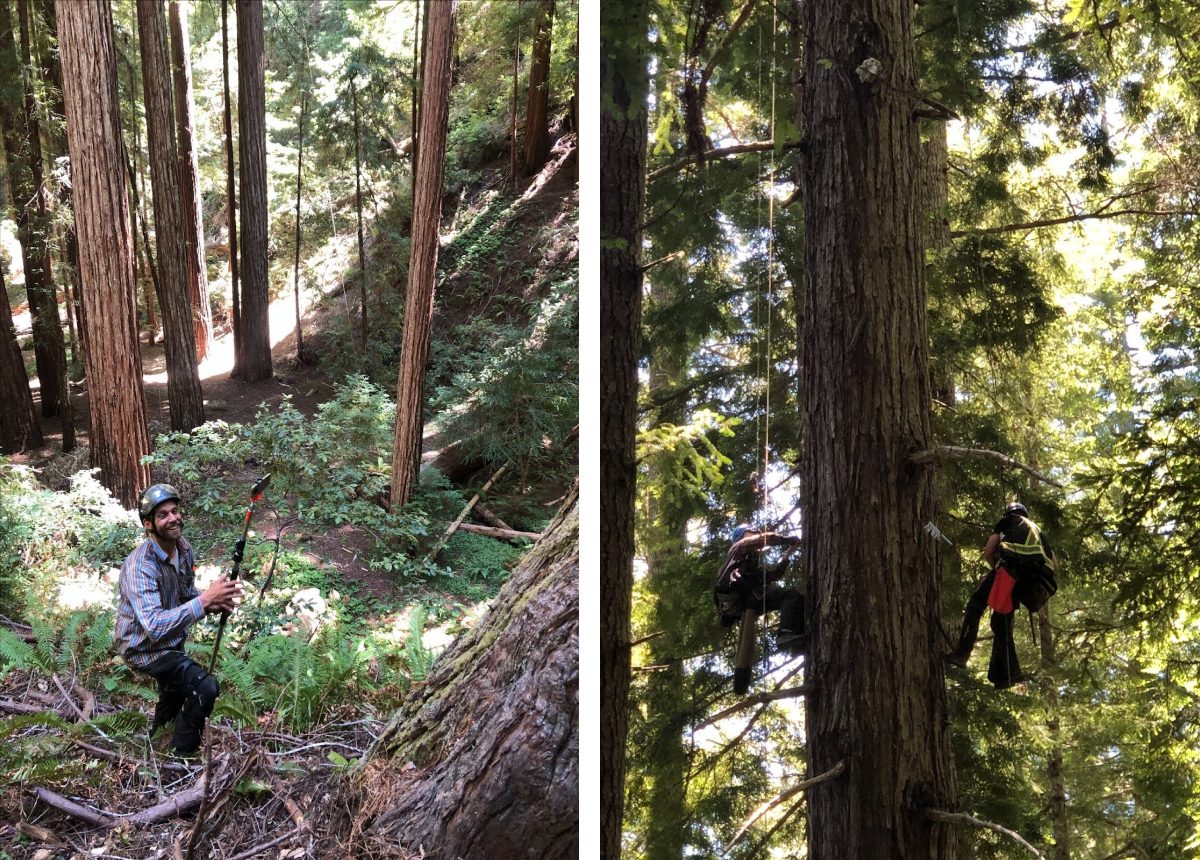
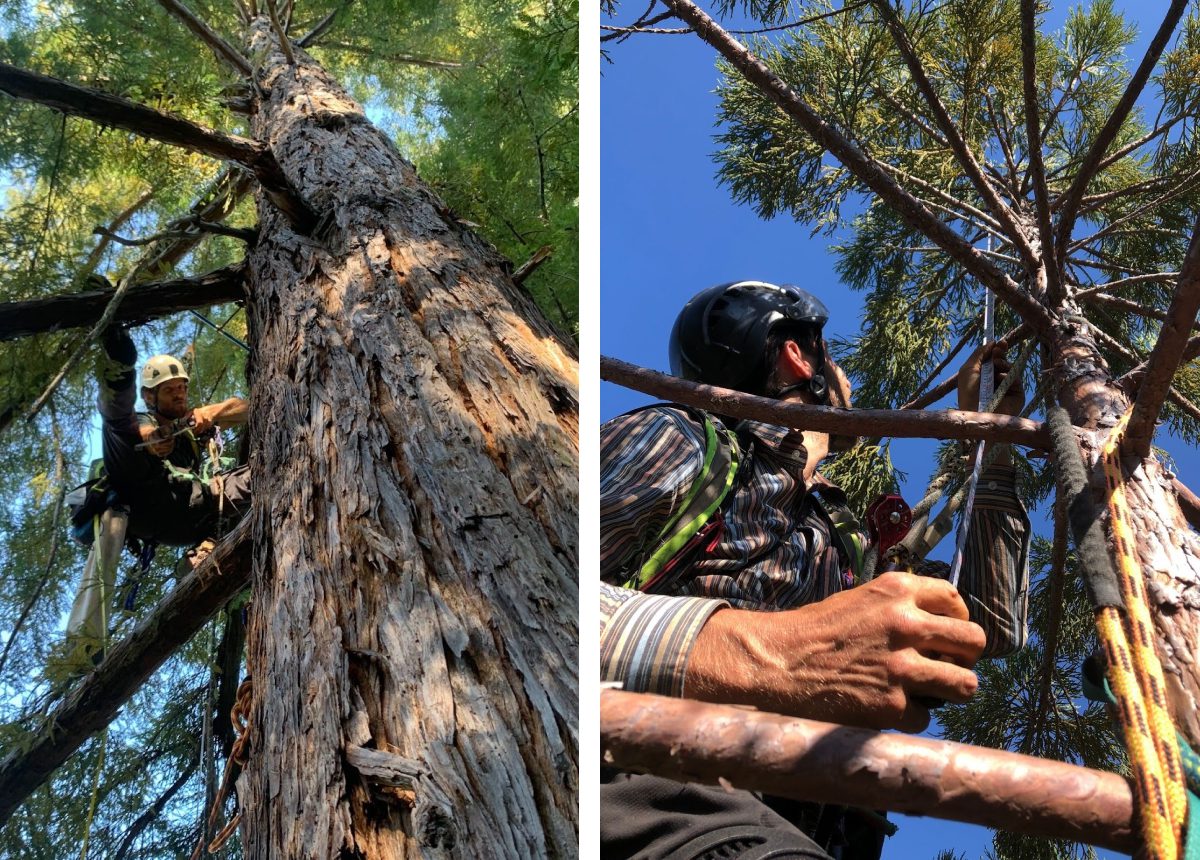
Resilient Forestry teamed up with Steve and Marie to develop tools for identifying exceptional trees in secondary redwood forests, describe their distribution, and to quantify their contributions to total forest biomass. We paired 20 run-of-the-mill (no pun intended) overstory trees with 20 exceptional trees (taller, broader crowns, and with larger branches than the standard trees) across 15 locations in Jackson and 10 locations in 2 other state-managed secondary redwood forests (Soquel and Las Posadas). We climbed the trees, measured trunk diameters to the top, cored them at multiple heights, and measured the diameter, height, crown size, and species of all trees visible from the treetop and within 60 ft to quantify the forest biomass and individual tree growth. We also flew drone-based lidar over these plots to develop models for predicting biomass and which trees were exceptional. These models were applied to lidar spanning Jackson.
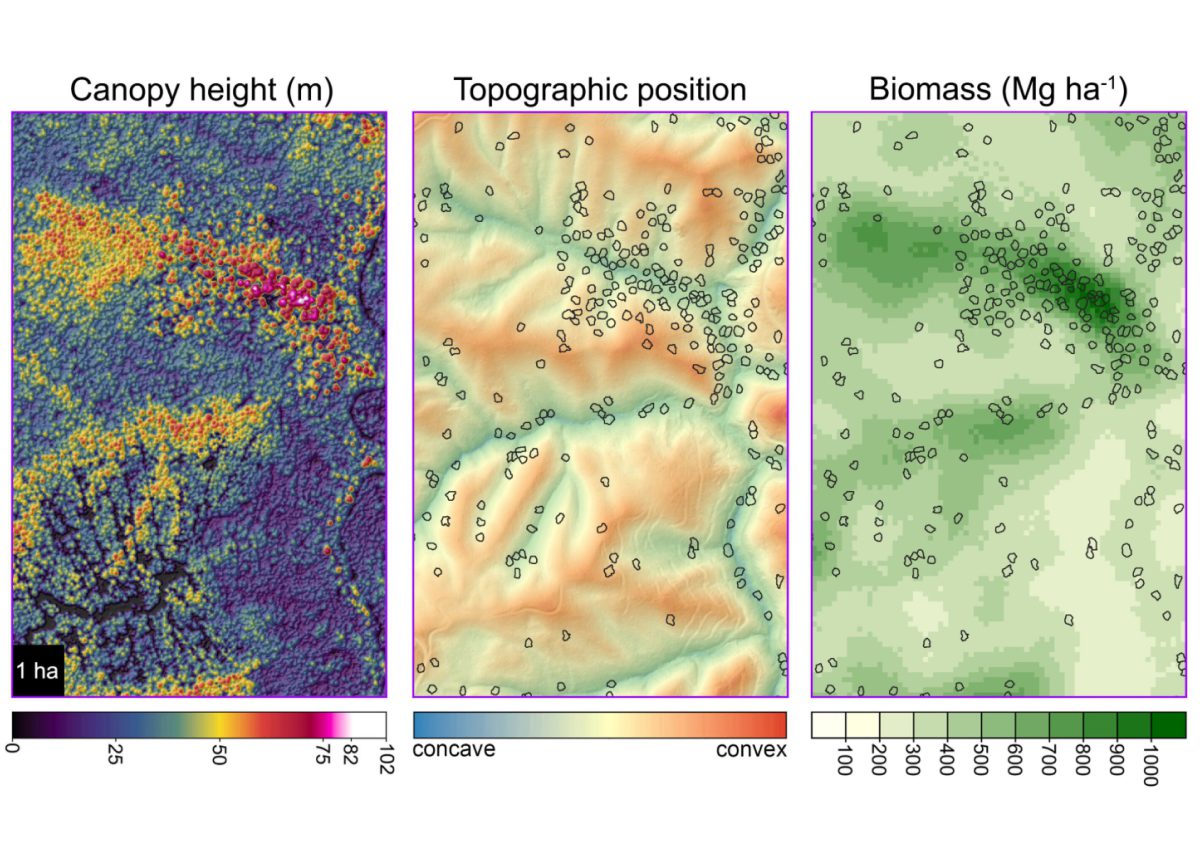
What did we find out? Exceptional trees were generally decades to centuries older than other co-dominant trees and showed distinct growth releases (periods of rapid growth following slower growth), suggesting that they had survived previous logging as understory trees. Exceptional trees were relatively sparse across Jackson (0–5 per acre), occurring mostly in only ⅓ of the area and concentrated in topographic depressions close to drainages. However, some areas had widely dispersed exceptional trees, showing that they could grow upslope and suggesting that the current distribution was probably due to restricted operations in riparian areas rather than environmental constraints.
Biomass in Jackson forests was approximately 10% of that in primary forests and comparable to secondary forests in parts of the range where growth is more limited by climate than at Jackson. Note: There are unique pygmy pine forests in Jackson limited by acidic soils. Total forest biomass increased with increasing exceptional tree density and somewhat surprisingly with decreasing co-dominant tree density. This means that exceptional trees had an outsized impact on forest carbon storage. An average of only 3 exceptional trees per acre was associated with forests having 220 tons per acre, a biomass density comparable to the heaviest non-conifer forests outside of the Pacific Northwest.
The original controversy was fueled by the questions over why CalFire was logging and why they were cutting larger trees. The first question is simple, this is land with a mandate to extract timber and interpreted by CalFire as land to demonstrate good forest management. However, it appears that forest management was limiting the distribution of exceptional trees except near streams. One heartening finding was that a relatively sparse population of exceptional trees promoted considerable carbon storage and if left in perpetuity could supply habitat across multiple management entries.
Managed forests will never perfectly emulate primary forests, but they can provide healthy ecosystems and social values such as recreation and jobs if we choose to manage with these in mind instead of optimizing for one. This requires compromise on both ends, potential loss of timber revenue and cutting of some large trees. Without such compromise, we inadvertently create a landscape of plantations and preserves, essentially black and white patches that are less functional at large scales than a more ecologically managed working forest. Hopefully we can usher in a new era of management where some trees are retained for their full life span, which for redwoods can be >2k years!
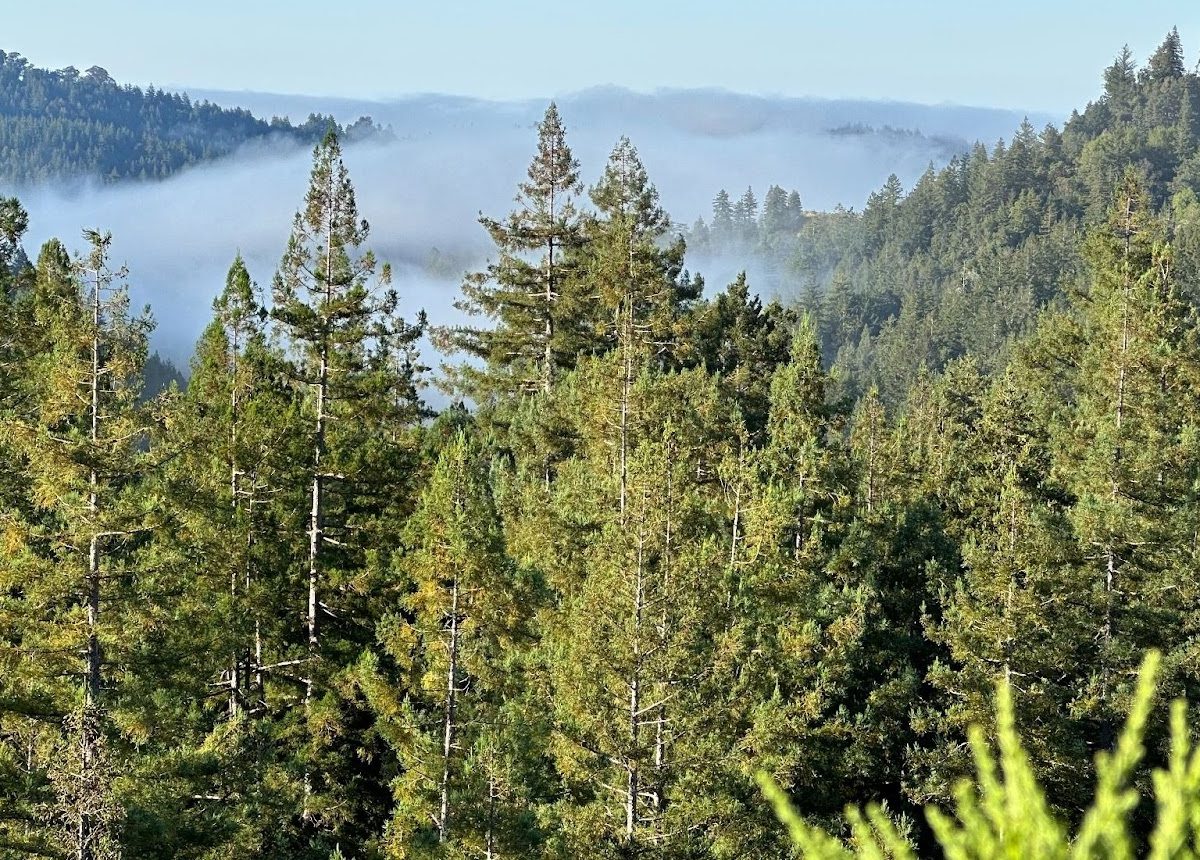
Thanks to CalFire for the generous support of this work and access to their forests, and thanks to Steve Sillett for conceptualizing this study of secondary redwood forests. The full academic article of this work can be found here, and wonderful summary article here.