
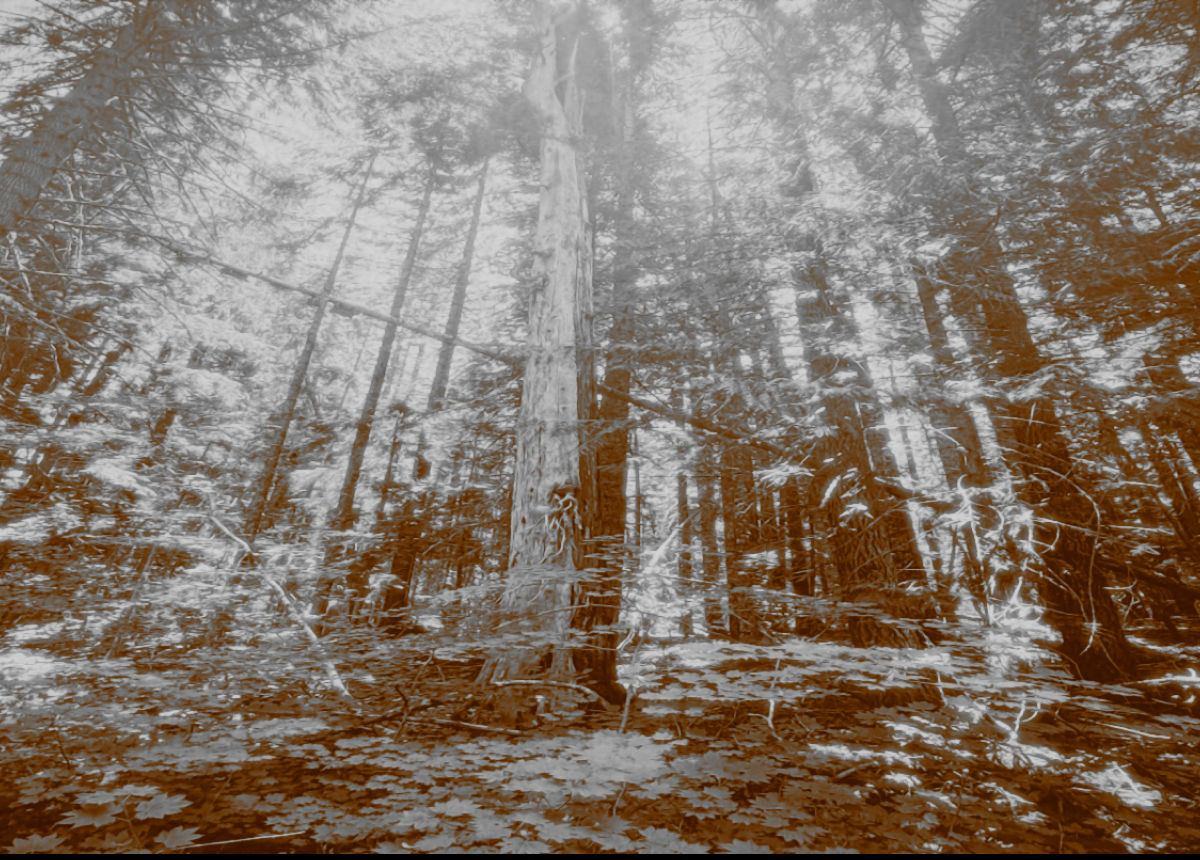

Step into an old-growth forest in the Pacific Northwest, and you feel it instantly. It’s more than just big trees. It’s a sense of profound complexity, a breathtaking space where sunlight filters through multiple layers of leaves and moss hangs thick on ancient branches. These forests feel timeless, but they are anything but static. They are living diaries, chronicling centuries of fire, storm, growth, and decay. For a long time, we could only appreciate their beauty. Now, by combining ecological knowledge with powerful new technology, we are able to read their stories across landscapes.
What Makes an Old-Growth Forest “Old”? It’s Not Just a Birthday
The first thing to understand is that “old” is not just a number. A 200-year-old forest that might be considered ancient in the eastern U.S. is still relatively young in the Pacific Northwest, where keystone species like Douglas-fir can live for over a millennium.
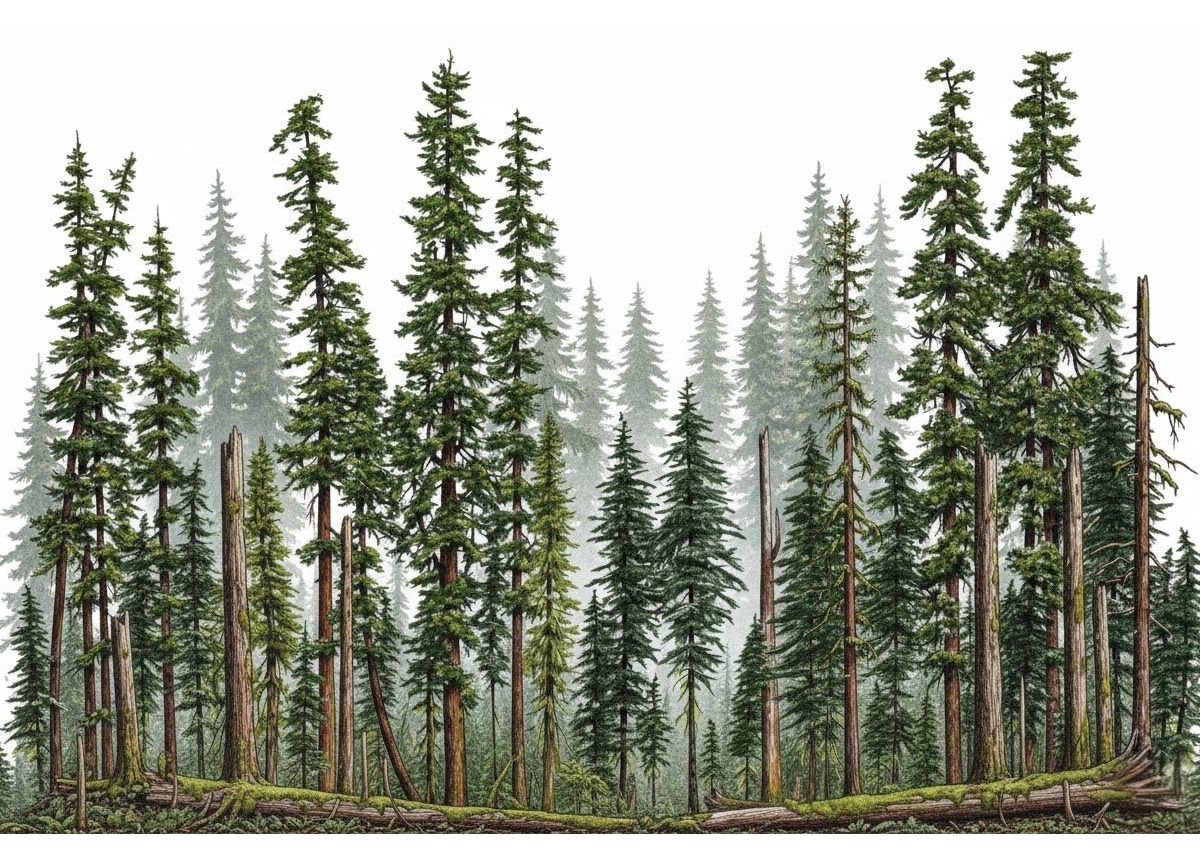
The true signature of an old-growth forest is its structural and compositional complexity. Think of it this way: a young, managed forest is often like a planned subdivision: neat rows of similar-aged trees forming a single, uniform canopy. An old-growth forest, by contrast, is like a vibrant, ancient city that has grown over centuries. It’s wonderfully messy and full of character. The complexity of old-growth forests unfolds in several dimensions:
- Vertically: Instead of a single ceiling, old-growth forests have multiple canopy layers, from towering emergent giants to shade-tolerant trees filling the mid-story. This creates a deep, continuous canopy punctuated by gaps, where fallen trees have opened the forest floor to sunlight, sparking new life.
- Horizontally: The forest floor is a mosaic of different conditions: dense thickets of regenerating saplings, open patches of ferns, and clusters of mature trees, all arranged irregularly.
- Life After Death: Three foundational elements build this architecture: massive live trees, standing dead trees (snags), and large fallen logs (coarse woody debris). This “life after death” cycle is crucial; a snag provides homes for owls and woodpeckers for decades before falling and becoming a “nurse log” for new seedlings, slowly releasing nutrients back into the soil over hundreds of years.
Check the sketch below to appreciate the complexity that characterizes old-growth forests in the Pacific Northwest (adapted from Van Pelt, 2007).
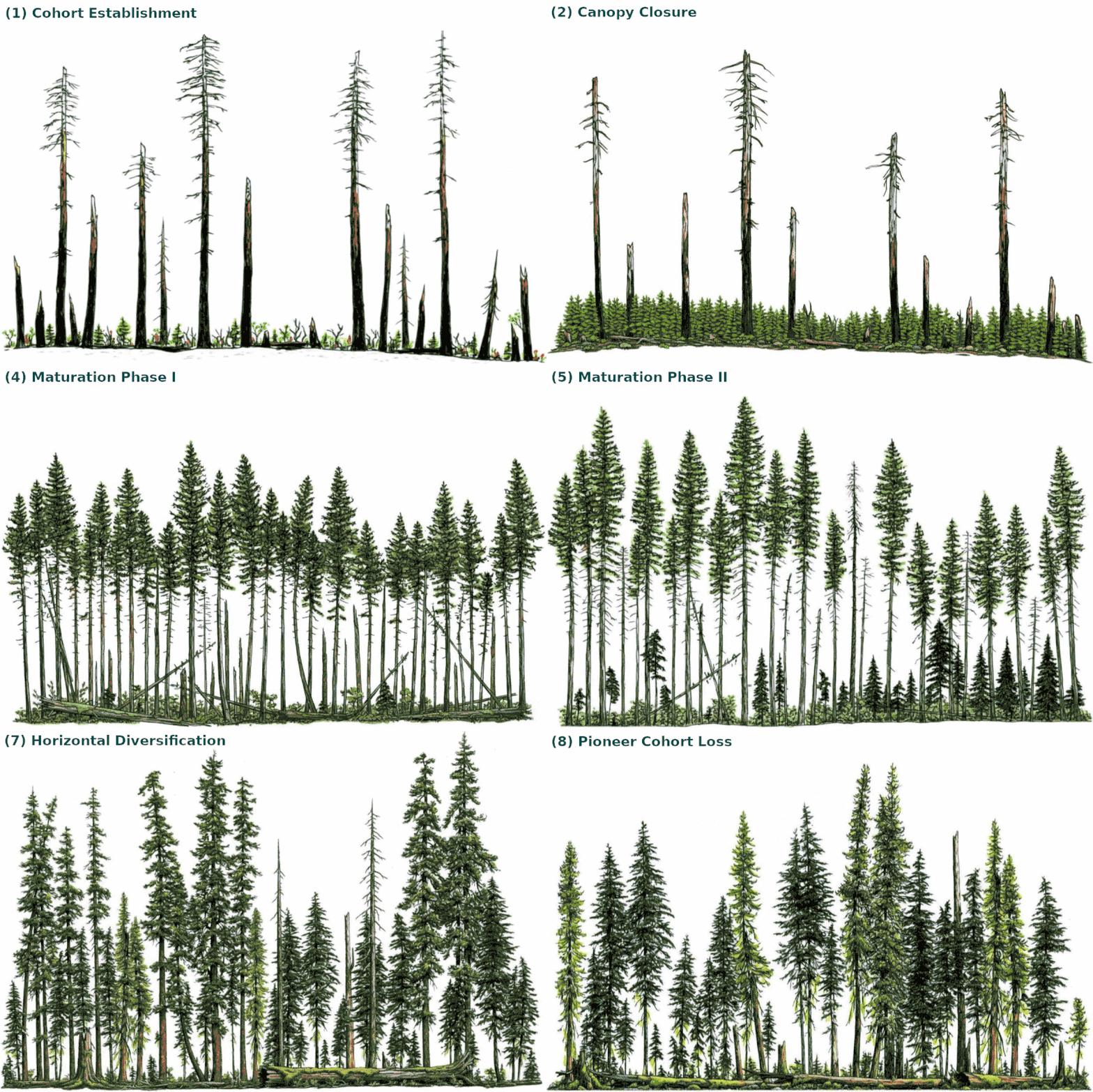
This intricate architecture isn’t just beautiful; it’s the engine of a healthy ecosystem providing niches for wildlife, storing globally significant amounts of carbon, and safeguarding the quality of water. This beautiful architecture is the result of a long journey through distinct development stages. The story often begins in the wake of a major disturbance like a fire, which leaves behind crucial “biological legacies” like snags and logs that seed the recovery. A new generation of sun-loving trees then sprouts and races for the sky, quickly forming a dense, single-layered canopy where a fierce competition for light weeds out the weak in a process of natural self-thinning.
After a century or more, the dynamic shifts. Large, dominant trees begin to fall not just to competition, but to agents like wind and disease. This creates gaps that allow light to flood the floor, nurturing shade-tolerant species like western hemlock that build a multi-layered understory. Over hundreds of years more, this cycle of death and renewal forges the old-growth endpoint: a breathtakingly complex mosaic of different tree species and ages, multiple canopy layers, large snags, and fallen logs.
The animation below shows a theoretical model of forest development that ecologists have proposed for western Washington. This model consists of 8 developmental stages, each one with a distinctive structural and compositional fingerprint (Van Pelt, 2007).
Spatial Awareness to Map the Stories
For decades, mapping the developmental stages that forests undergo until they reach old-growth conditions presented a daunting challenge. How could we possibly quantify intricate stage-specific structural patterns and their distribution across a landscape? Traditional field methods, like walking transects and measuring individual trees, are essential but give us only a localized view. Furthermore, dynamics of key developmental indicators like canopy and gap patches require a spatially-explicit assessment across multiple scales (e.g., patch, group of patches, stand, landscape, etc).
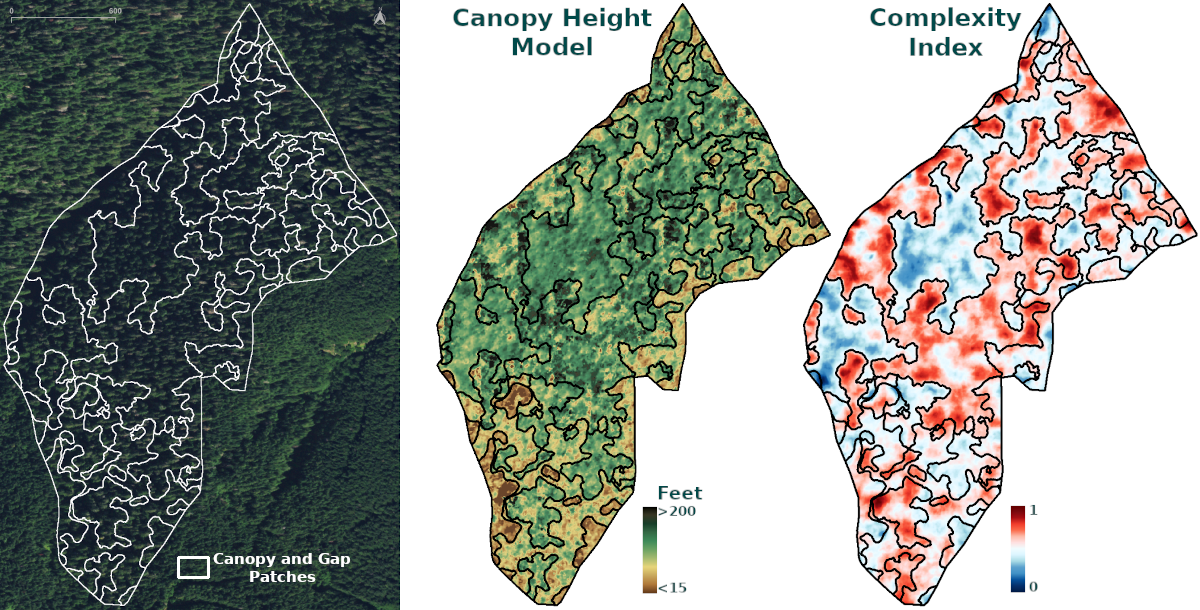
This is where our specialized approach creates a paradigm shift. At Resilient Forestry, we don’t just see trees, we see data, patterns, and relationships. We’ve developed robust analytical workflows that translate the complex, spatio-temporal language of the forest into clear, actionable knowledge. Our process begins by leveraging novel remote sensing technologies to build accurate 3D models of the forest. We use these models to quantify the canopy complexity by turning simple canopy height maps into informative signatures of vertical diversity. Moreover, our analytical processes are trained to map the fine-scale mosaic of canopy gaps and tree clumps that are the engine of heterogeneity. By analyzing the size, shape, and diversity of these patches, we get a direct measure of the horizontal complexity.
The figure below shows a canopy height model (CHM) built through aerial photogrammetry for a stand with old-growth characteristics in western Washington. A map of the canopy complexity index is also shown. The delineations represent canopy and gap patches with distinctive spatial heterogeneity patterns.
From Data to Decisions: Managing for a Complex Future
Having numerous datasets is one thing, turning them into functional knowledge is another. This is the final step. By feeding sophisticated analytical models with remotely-sensed metrics coupled with traditional forest inventory metrics, we can classify thousands of forest stands into their respective developmental stages. This ability to accurately assess a forest’s life stage is revolutionary for ecological forestry. It allows land managers to:
- Identify and Protect: Locate and conserve patches of old-growth forest, which are paramount for optimal ecological functioning.
- Monitor Forest Health: Track how younger forests are recovering after disturbances or harvests, ensuring they are on a trajectory toward greater complexity.
- Innovate Management: Design new forestry practices, like variable retention harvesting, that intentionally leave behind biological legacies like snags, logs, and live trees, to safeguard biodiversity and accelerate the development of old-growth characteristics in managed stands.
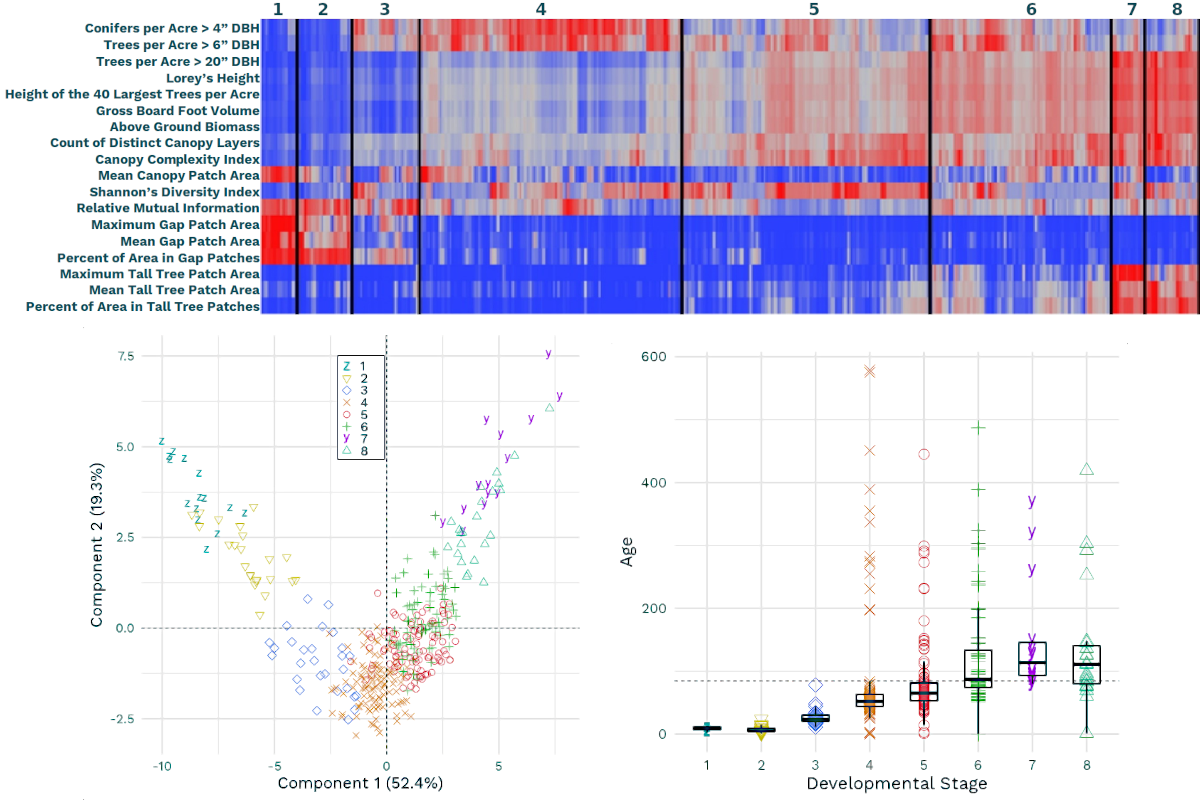
The figure below shows how we “mine” patterns from remote sensing and inventory metrics to classify hundreds of forest stands based on their inferred developmental stage. The metrics heatmap (top) indicates the optimal grouping of stands into developmental stages based on the metrics values (more red = greater values). The scatterplot (bottom left) shows the stages arranged along a developmental gradient (1 = youngest, 8 = oldest). The boxplot shows the relationship between stand age and the developmental stages as a form of qualitative validation of the classification.
By understanding the story of how natural forests develop, we can learn to work with nature. We can manage our forests not just for timber, but for resilience, biodiversity, and the irreplaceable services they provide for all of us. The forest has always been writing its diary; thanks to new science and technology, we are becoming more and more fluent in its language.