
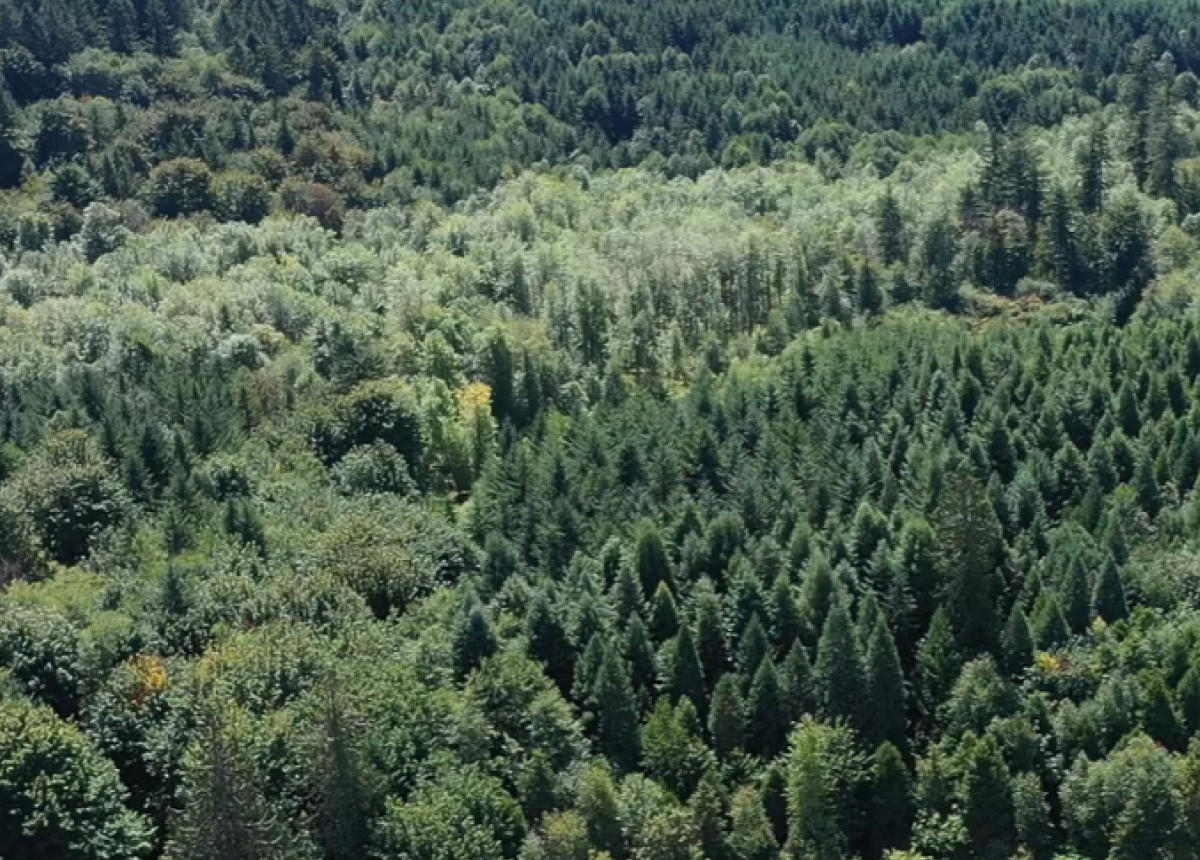

People are increasingly planting redwoods in the pacific northwest (PNW), which is north of their current natural range. These vary from enthusiasts wanting to show off a few magnificent trees to timber operations planting thousands to diversify their business. Redwoods have many attractive attributes including (but not limited to) beauty, fast growth, and resistance to fire and disease. Redwoods also come with many unknowns in the PNW where they are uncommon and untested in many areas.
Enter PropagationNation, an organization promoting redwoods in the PNW to increase carbon capture and resilience to introduced diseases and fire. They are a mission-driven organization offering redwood clones and seedlings and have created a network of redwood-curious forest owners and a collection of redwood-related resources. Resilient Forestry teamed up with PropagationNation to develop a strategy landowners can use when planning how they want to include redwoods on their property.
Here we are referring to coastal redwoods, not their giant sequoia cousins.
The strategy first summarizes strengths and weaknesses of growing redwoods from an operational perspective and then synthesizes these into four guiding principles:
- Match species to site – redwoods have limitations, especially tolerance to salt spray and hard freezes in the PNW.
- Align management with redwood biology – redwoods can tolerate shade, grow fast, and sprout rapidly from stumps. This offers a lot of options not available with other species!
- Integrate ecological values – maintain grounding in ecological principles. Resist the urge to optimize for one value at the expense of ecological functions such as biodiversity
- Prioritize genetic diversity – Redwoods do not produce a reliable seed supply in the wild and seeds do not keep well, so genetic stock is often limited. Strive to incorporate new genetics when possible
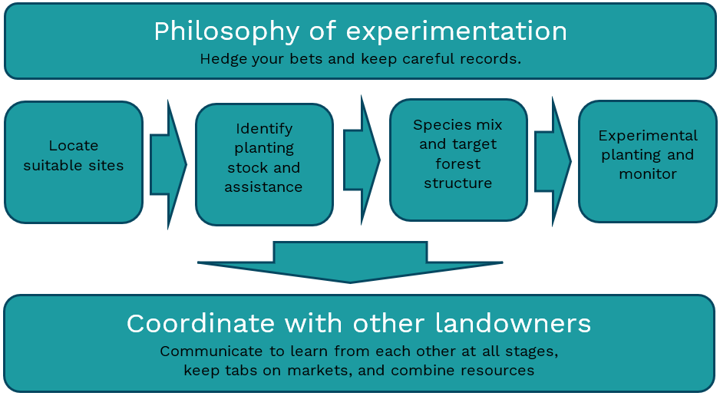
These four principles are then integrated into a strategy. Overlying the strategy is a philosophy of experimentation. Planting redwoods puts you at the leading edge of what we know! Expect to be learning as you go, maintain records, and iterate based on what you learn. Each stage of the strategy – locate suitable sites, identity planting stock and assistance, decide on a target planting pattern and species mix, and monitor – includes actions to follow based the relevant principles above. Underlying the strategy is the support of a network of other landowners incorporating redwoods facilitated by PropagationNation (Figure 1). This support network can help combine collective resources and to learn from each other’s successes and failures.
The strategy is presented as a high-level planning tool. To demonstrate how one would tailor the strategy to their particular contexts, we created a table showing tactical decisions one might take based on a gradient of management values from someone solely interested in timber production to someone interested solely in ecological integrity. For example, landowners can plant redwoods as a dense monoculture, as isolated individuals, or as an understory tree. Each of these options will have different effects on the trees and are appropriate in different locations.
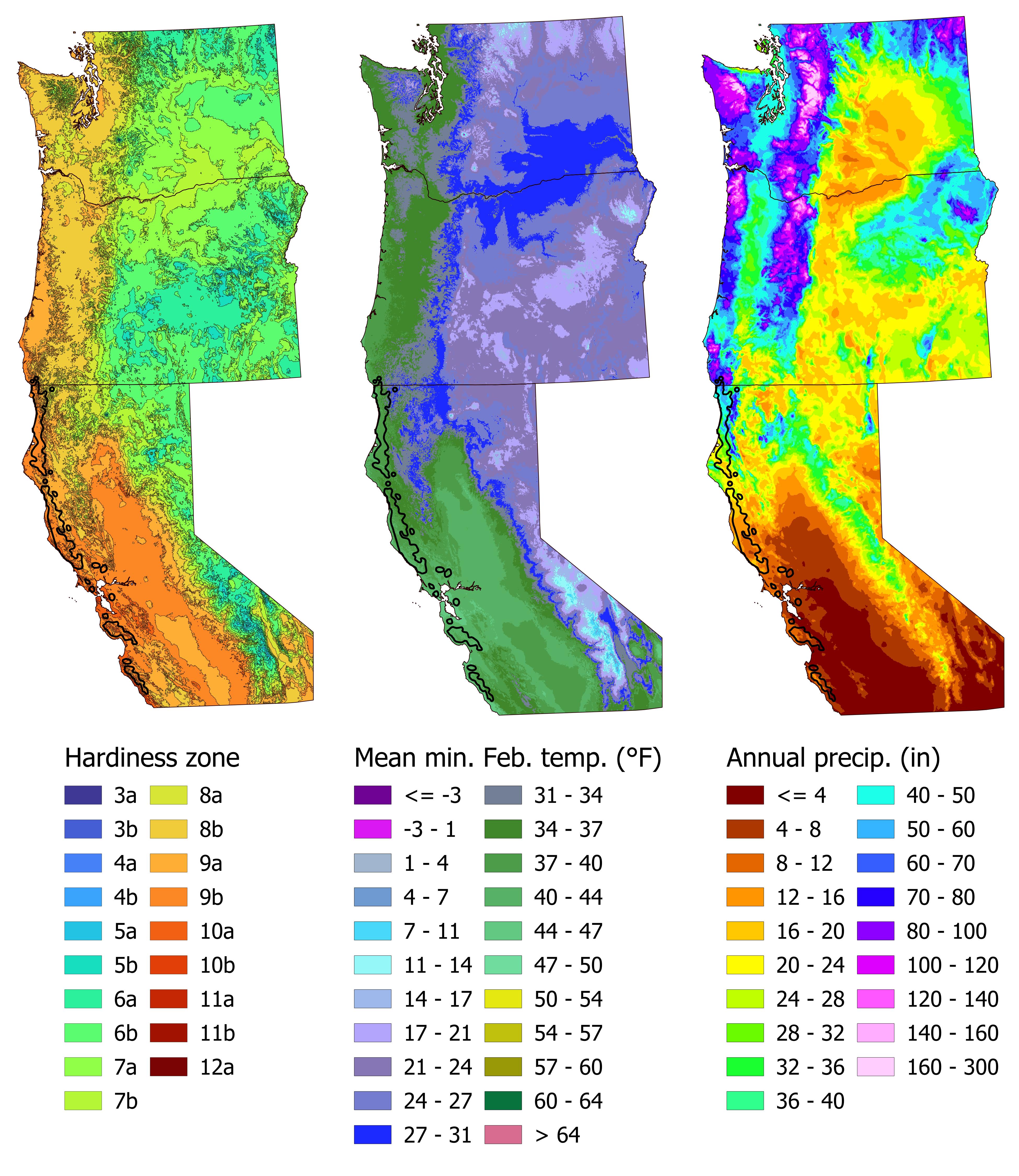
We also include an example of how to select sites based on publicly available climate data (Figure 2).
How to use the strategy:
- Identify your management goals
- Follow the four main steps in the strategy (Figure 1).
- At each step, make decisions specific to your goals and site based on:
- the four guiding principles and
- your management goals
- Use the specific tactics table for ideas
- or consult outside resources and expertise.
- Consult with your local regulators in WA (State DNR) and OR (County Forester) to determine if your plan is acceptable for your property zoning
- Iterate and connect to learn!
We recognize that planting redwoods outside its native range has ecological and legal implications and do not ignore this in the strategy. The report ends with a summary of the ecological implications of incorporating redwoods and an appendix for how to mitigate policy resistance to planting redwoods on timber lands. We believe you can incorporate redwoods in a way that increases the resilience and biodiversity of our forests!
Check out the strategy here, and check out more of the resources from PropagationNation.
Oregon State University also published a guiding document for growing redwoods in Oregon. This document is less strategic and should be consulted for more detailed tactical information.